
 News & Insights
This month’s edition provides a focused review of newly approved and recently launched therapies. Expion Health monitors these developments closely to assess clinical relevance, therapeutic positioning, and potential implications for payers, providers, and patients.
Indication
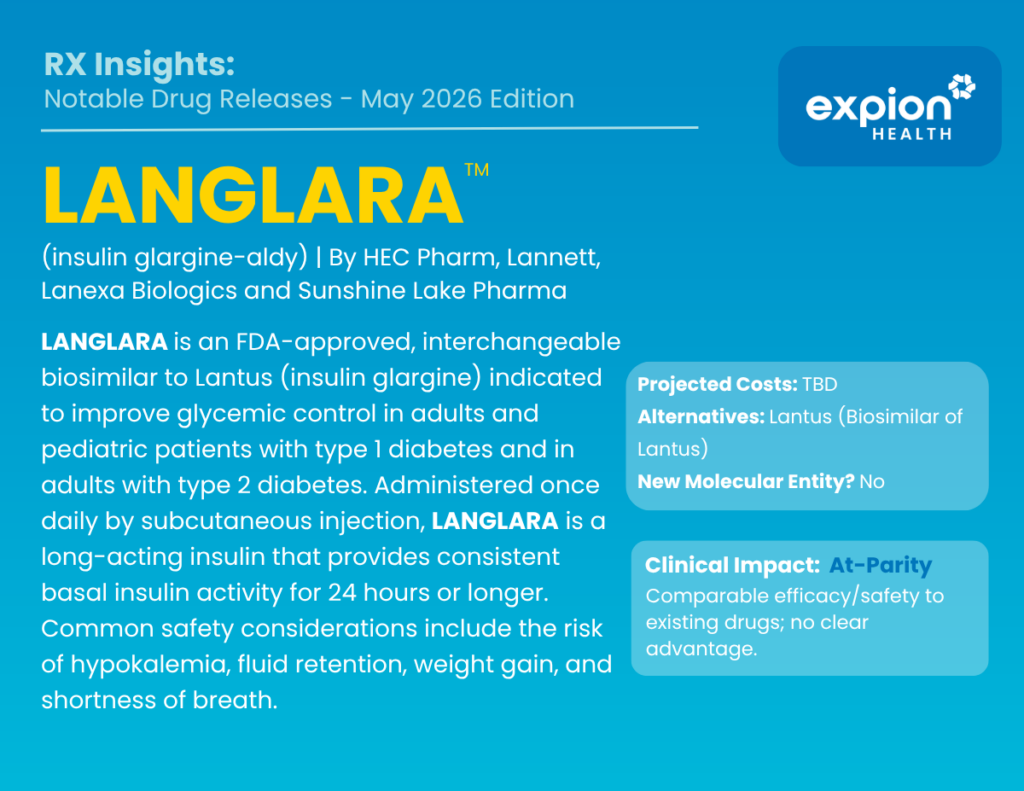
LANGLARA (insulin glargine-aldy) is an FDA-approved biosimilar to Lantus and is indicated to improve glycemic control in adults and pediatric patients with type 1 diabetes mellitus and in adults with type 2 diabetes mellitus. LANGLARA has also been designated by the FDA as interchangeable with Lantus.
Dosage and Administration
LANGLARA is supplied as a 100 units/mL solution in a 3 mL prefilled pen for single-patient use. It is administered subcutaneously once daily at the same time each day, with recommended injection sites including the abdomen, thigh, or deltoid. Dosage should be individualized based on the patient’s type of diabetes, age, and clinical needs.
Warnings and Precautions
LANGLARA may cause serious adverse reactions, including hypoglycemia, hypokalemia, rapid weight gain, peripheral edema, and shortness of breath. Patients should be monitored for changes in blood glucose and potassium levels. Healthcare providers should be informed if a patient is breastfeeding.
Mechanism of Action
Insulin glargine-yfgn is a long-acting insulin analog that provides a steady basal level of insulin activity for 24 hours or longer following once-daily administration. It helps regulate blood glucose levels by facilitating cellular glucose uptake and suppressing hepatic glucose production.
Disease Background
Diabetes is a chronic, progressive metabolic disorder characterized by elevated blood glucose levels resulting from inadequate insulin production, impaired insulin action, or both. More than 40 million people in the United States are living with diabetes. The disease is generally classified into three main types: type 1 diabetes, type 2 diabetes, and gestational diabetes. Effective glycemic management is essential to reduce the risk of long-term complications affecting the cardiovascular, renal, neurologic, and visual systems.
Clinical Data
FDA approval of LANGLARA was supported by a comprehensive biosimilar development program that included analytical, preclinical, and clinical studies. The totality of evidence demonstrated pharmacokinetic, pharmacodynamic, efficacy, safety, and immunogenicity profiles highly similar to those of Lantus in patients with both type 1 and type 2 diabetes, supporting its approval as an interchangeable biosimilar.

Indication
VEPPANU (vepdegestrant) is indicated for the treatment of adults with estrogen receptor (ER)-positive, human epidermal growth factor receptor 2 (HER2)-negative, ESR1-mutated advanced or metastatic breast cancer whose disease has progressed following at least one line of endocrine-based therapy.
Dosage and Administration
VEPPANU is available as an oral tablet taken once daily with food. Tablets should be swallowed whole and not chewed, crushed, or split. If a dose is missed, the next dose should be taken at the regularly scheduled time on the following day.
Warnings and Precautions
VEPPANU may cause serious adverse reactions, including heart rhythm abnormalities and potential fertility impairment. Common adverse reactions include decreased white blood cell counts, anemia, thrombocytopenia, elevated liver enzymes, musculoskeletal pain, fatigue, nausea, decreased appetite, hypokalemia, and constipation.
Mechanism of Action
VEPPANU is a targeted endocrine therapy designed to inhibit signaling through mutant estrogen receptor 1 (ESR1), a common mechanism of resistance to endocrine treatment in hormone receptor-positive breast cancer. By targeting ESR1-mutated tumor cells, VEPPANU helps slow disease progression in patients whose cancer has become resistant to prior endocrine therapies.
Disease Background
Breast cancer is a disease that begins in breast tissue and can spread to nearby lymph nodes and distant organs. It is the most commonly diagnosed cancer among women in the United States. According to the Centers for Disease Control and Prevention, approximately 279,731 new cases of breast cancer were reported among U.S. women in 2022, and more than 42,000 breast cancer-related deaths occurred in 2023. Hormone receptor-positive, HER2-negative breast cancer is the most common breast cancer subtype, and ESR1 mutations are an important driver of resistance to endocrine therapy in advanced disease.
Clinical Data
FDA approval of VEPPANU was based on results from the Phase 3 VERITAC-2 trial, a randomized, open-label, multicenter study involving 624 patients with ER-positive, HER2-negative advanced or metastatic breast cancer previously treated with endocrine therapy and a CDK4/6 inhibitor. In patients with ESR1-mutated tumors, VEPPANUdemonstrated a 43% reduction in the risk of disease progression or death compared with fulvestrant, supporting its use as a treatment option following progression on prior endocrine therapy.
Indication
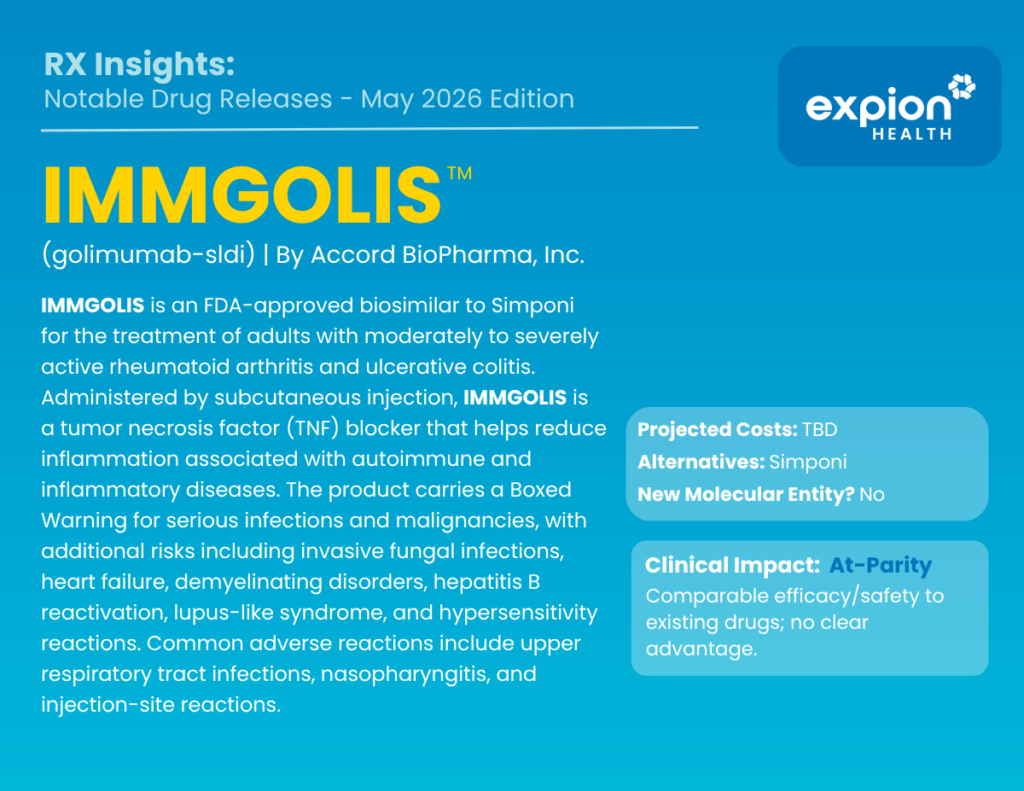
IMMGOLIS (golimumab-sldi) is a biosimilar to Simponi and is indicated for the treatment of adults with moderately to severely active rheumatoid arthritis and ulcerative colitis.
Dosage and Administration
IMMGOLIS is administered by subcutaneous injection and is available as a prefilled syringe in strengths of 50 mg/0.5 mL and 100 mg/1 mL. Dosing is based on the approved indication and patient-specific treatment requirements.
Warnings and Precautions
IMMGOLIS carries a Boxed Warning for serious infections and malignancies. Patients receiving treatment are at increased risk for developing serious bacterial, fungal, viral, and opportunistic infections that may lead to hospitalization or death. Additional warnings and precautions include invasive fungal infections, lymphoma and other malignancies, congestive heart failure, demyelinating disorders, hepatitis B virus reactivation, lupus-like syndrome, and hypersensitivity reactions. The most common adverse reactions include upper respiratory tract infections, nasopharyngitis, and injection-site reactions.
Mechanism of Action
IMMGOLIS is a tumor necrosis factor (TNF) blocker that binds to and neutralizes TNF-alpha, a pro-inflammatory cytokine involved in the pathogenesis of autoimmune and inflammatory diseases. By inhibiting TNF activity, IMMGOLIS helps reduce inflammation and improve disease control.
Disease Background
Rheumatoid arthritis is a chronic autoimmune disease in which the immune system attacks healthy joint tissue, leading to inflammation, pain, stiffness, and progressive joint damage. Ulcerative colitis is a chronic inflammatory bowel disease characterized by inflammation and ulceration of the lining of the colon and rectum, resulting in symptoms such as diarrhea, abdominal pain, and rectal bleeding. Both conditions can significantly impair quality of life and often require long-term immunomodulatory therapy.
Clinical Data
FDA approval of IMMGOLIS was based on a comprehensive biosimilar development program demonstrating that the product is highly similar to Simponi, with no clinically meaningful differences in safety, purity, potency, pharmacokinetics, or efficacy. These data support IMMGOLIS as an additional treatment option for patients requiring TNF inhibitor therapy.
Indication
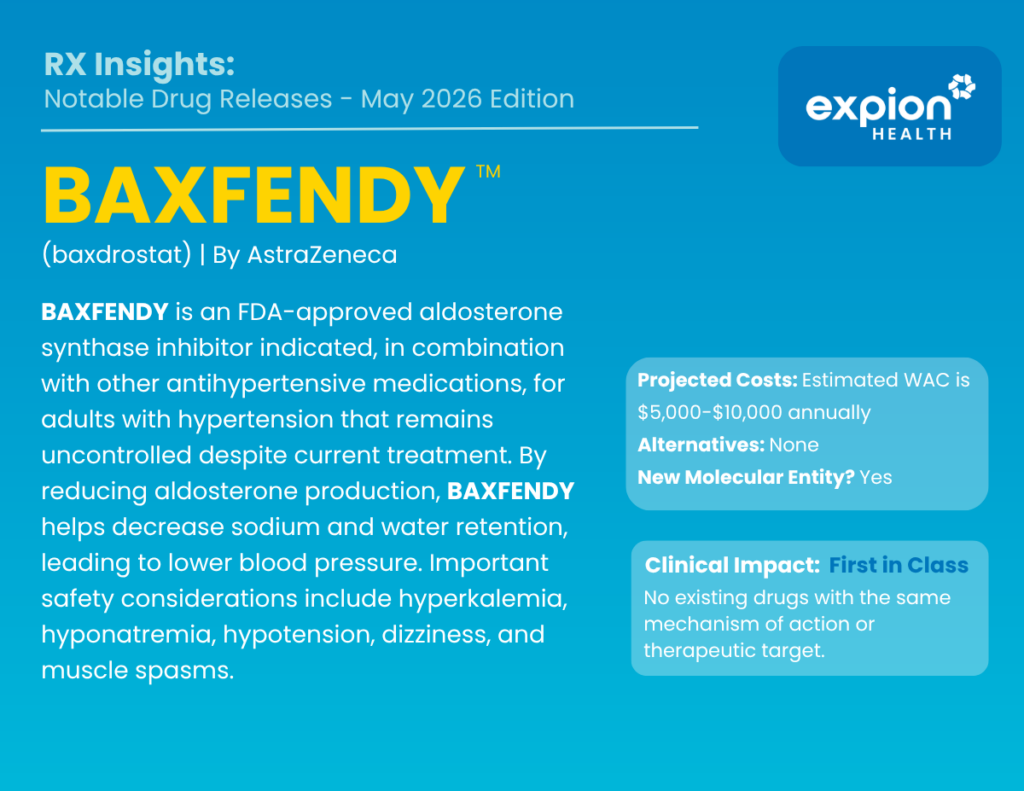
BAXFENDY (baxdrostat) is indicated, in combination with other antihypertensive medications, for the treatment of hypertension in adults whose blood pressure is not adequately controlled with current therapy. BAXFENDY is not approved for use in patients younger than 18 years of age.
Dosage and Administration
BAXFENDY is available as 1 mg and 2 mg oral tablets. The recommended dosage is 2 mg taken once daily. For patients at increased risk of hyperkalemia or hyponatremia, the recommended starting dose is 1 mg once daily.
Warnings and Precautions
BAXFENDY may cause serious adverse reactions, including hyperkalemia (elevated potassium levels) and hyponatremia (low sodium levels). Other common adverse reactions include hypotension, dizziness, and muscle spasms. Monitoring of serum potassium and sodium levels is recommended during treatment.
Mechanism of Action
BAXFENDY is an aldosterone synthase inhibitor (ASI) that reduces the production of aldosterone, a hormone that promotes sodium and water retention and contributes to elevated blood pressure. By lowering aldosterone levels, BAXFENDY helps reduce blood pressure and improve hypertension control.
Disease Background
Hypertension is one of the most common chronic conditions in the United States, affecting nearly 47% of adults. Approximately 37 million Americans have uncontrolled high blood pressure despite treatment. Uncontrolled hypertension is a major risk factor for cardiovascular disease, stroke, kidney disease, and premature death, underscoring the need for additional treatment options for patients who do not achieve adequate blood pressure control with existing therapies.
Clinical Data
FDA approval of BAXFENDY was supported by results from the Phase 3 BaxHTN trial, which enrolled adults with hypertension who remained uncontrolled despite treatment with at least two antihypertensive medications, including a diuretic. At 12 weeks, patients receiving BAXFENDY 2 mg achieved a mean reduction in seated systolic blood pressure of 15.7 mmHg from baseline, compared with 5.8 mmHg in the placebo group, resulting in a placebo-adjusted reduction of 9.8 mmHg. Patients receiving BAXFENDY 1 mg achieved a mean reduction of 14.5 mmHg, corresponding to a placebo-adjusted reduction of 8.7 mmHg.

Indication
BEQALZI (sonrotoclax) is indicated for the treatment of adults with relapsed or refractory mantle cell lymphoma (MCL) who have received at least two prior lines of systemic therapy, including a Bruton’s tyrosine kinase (BTK) inhibitor.
Dosage and Administration
BEQALZI is administered orally using a 4-week dose ramp-up schedule beginning at 1 mg daily. Beginning in Week 5, the recommended dosage is 320 mg once daily. Tablets should be taken with a meal and a glass of water. Treatment should continue until disease progression or unacceptable toxicity occurs.
Warnings and Precautions
BEQALZI can cause serious or life-threatening tumor lysis syndrome (TLS), particularly during treatment initiation and dose escalation. Additional serious risks include infections, neutropenia, and embryo-fetal toxicity. Common adverse reactions include pneumonia, fatigue, edema, diarrhea, upper respiratory tract infection, pyrexia, constipation, rash, and musculoskeletal pain, including muscle, bone, and back pain.
Mechanism of Action
BEQALZI is a B-cell lymphoma 2 (BCL-2) inhibitor. BCL-2 is a protein that helps cancer cells evade programmed cell death. By inhibiting BCL-2, BEQALZI promotes apoptosis and helps eliminate malignant lymphoma cells.
Disease Background
Mantle cell lymphoma is a rare and aggressive subtype of mature B-cell non-Hodgkin lymphoma that accounts for approximately 3% to 10% of lymphoma cases in the United States. The disease most commonly affects older adults, with a median age at diagnosis of approximately 68 years, and is often diagnosed at an advanced stage involving the lymph nodes, bone marrow, and other organs. Although many patients initially respond to treatment, relapses are common, highlighting the need for effective therapies in the relapsed or refractory setting.
Clinical Data
FDA approval of BEQALZI was based on overall response rate and duration of response data from clinical studies in patients with relapsed or refractory MCL. Treatment with BEQALZI produced an overall response rate of 52%, with a median duration of response of 15.8 months. Continued approval may be contingent upon verification of clinical benefit in ongoing confirmatory trials.

Indication
HEPCLUDEX (bulevirtide-gmod) is indicated for the treatment of chronic hepatitis delta virus (HDV) infection in adults without cirrhosis or with compensated cirrhosis.
Dosage and Administration
The recommended dosage of HEPCLUDEX is 8.5 mg administered once daily by subcutaneous injection. Treatment should be continued as long as a therapeutic response is maintained, although the optimal duration of therapy has not been established. Because HDV infection occurs only in the presence of hepatitis B virus (HBV), underlying HBV infection should be managed as clinically appropriate.
Warnings and Precautions
HEPCLUDEX carries a Boxed Warning for severe acute exacerbations of hepatitis D and hepatitis B following treatment discontinuation, particularly in patients with cirrhosis, who may be at increased risk of hepatic decompensation. Patients who discontinue therapy should undergo close clinical and laboratory monitoring, including HBV DNA and HDV RNA viral load assessments, for at least six months. Hypersensitivity reactions, including anaphylaxis, have also been reported and require immediate discontinuation and appropriate medical management.
Mechanism of Action
HEPCLUDEX is a first-in-class antiviral agent that blocks the entry of both HDV and HBV into hepatocytes by inhibiting a key cellular receptor involved in viral infection. By preventing viral entry into liver cells, HEPCLUDEXinterrupts an essential step in the viral life cycle.
Disease Background
Chronic HDV infection is the most severe form of viral hepatitis and occurs only in individuals infected with HBV. Globally, an estimated 12 million people are co-infected with HDV and HBV, including approximately 40,000 to 80,000 people in the United States. Compared with HBV infection alone, HDV co-infection is associated with more rapid progression to liver fibrosis, cirrhosis, hepatic decompensation, hepatocellular carcinoma, and death. In patients with cirrhosis, mortality rates may approach 50% within five years.
Clinical Data
FDA accelerated approval of HEPCLUDEX was primarily supported by results from the pivotal Phase 3 MYR301 trial, which evaluated adults with chronic HDV infection treated for up to 144 weeks. At Week 48, HEPCLUDEX achieved a statistically significant improvement in the study’s primary endpoint of combined virologic, and biochemical response compared with the delayed-treatment control group, based on reductions in HDV RNA and normalization of alanine aminotransferase (ALT) levels. Improvement in long-term clinical outcomes has not yet been established, and continued approval may be contingent upon verification of clinical benefit in confirmatory studies.

Indication
DECNUPAZ (pivekimab sunirine-pvzy) is indicated for the treatment of adult patients with blastic plasmacytoid dendritic cell neoplasm (BPDCN).
Dosage and Administration
The recommended dosage of DECNUPAZ is 0.045 mg/kg administered as an intravenous infusion over approximately 15 to 30 minutes once every three weeks (21-day cycle). Dosing is based on actual body weight, and treatment should continue until disease progression or unacceptable toxicity occurs.
Warnings and Precautions
DECNUPAZ carries a Boxed Warning for hepatotoxicity, including severe or fatal hepatic veno-occlusive disease (VOD), also known as sinusoidal obstruction syndrome. Patients should be monitored for signs and symptoms of VOD, including elevated liver function tests, hepatomegaly, rapid weight gain, and ascites. Liver tests should be assessed prior to each dose, and treatment should be delayed or discontinued based on the severity of hepatic toxicity. Additional serious adverse reactions include infusion-related reactions, edema and fluid retention, sulfite-allergic reactions, and embryo-fetal toxicity.
Mechanism of Action
DECNUPAZ is a CD123-targeted antibody-drug conjugate (ADC) designed to deliver a potent cytotoxic payload directly to BPDCN cells. CD123, the interleukin-3 receptor alpha (IL-3Rα), is highly expressed on BPDCN cells. After binding to CD123, DECNUPAZ delivers its DNA-alkylating payload, inducing single-strand DNA breaks and triggering apoptosis of malignant cells.
Disease Background
Blastic plasmacytoid dendritic cell neoplasm is an ultra-rare, aggressive hematologic malignancy with limited treatment options. The disease commonly presents with skin lesions and can rapidly spread to the bone marrow, lymph nodes, and central nervous system. BPDCN most frequently affects older adults, particularly men between 60 and 70 years of age. Although patients may initially respond to intensive chemotherapy and stem cell transplantation, relapse is common and outcomes remain poor.
Clinical Data
FDA approval of DECNUPAZ was based on results from the Phase 1/2 CADENZA trial. Among newly diagnosed patients with BPDCN (n=33), treatment with DECNUPAZ achieved a composite complete response rate of 69.7% with a median duration of response of 9.7 months; 39.4% of patients subsequently underwent stem cell transplantation. In patients with relapsed or refractory BPDCN (n=51), the composite complete response rate was 15.7% with a median duration of response of 9.2 months, and 11.8% proceeded to stem cell transplantation. These findings demonstrated clinically meaningful and durable responses in a disease with few effective treatment options.
For the teams building pharmacy forward
Get the Expion Health® perspective on the trends, decisions, and market shifts redefining how pharmacy value is created.



Move beyond the pharmacy black box
See how Expion helps organizations build pharmacy strategies with more visibility, flexibility and control from the start.